
College essay writing doesn’t have to be a senior year crisis. Learn why starting early—even at 13 or 14—gives teens the confidence and skills they need to tell their authentic story.
If you’re a parent of a middle schooler or early high schooler, the college essay probably feels like something you’ll worry about… later.
Way later.
Like, “let’s get through algebra first” later.
But here’s what I’ve learned after years of working with teens on college essays: The kids who feel most confident writing their college essays aren’t the ones who started in September of senior year. They’re the ones who’ve been building the foundational skills—storytelling, self-reflection, authentic voice—long before the Common App ever opened.
And no, I’m not suggesting your 13-year-old needs to stress about college admissions. (Please don’t do that.)
What I am suggesting is that the skills required to write a compelling college essay are the same skills that help teens navigate everything else in their lives: understanding their own experiences, articulating what matters to them, and communicating authentically.
These aren’t “college essay skills.” These are life skills.
And the earlier teens start practicing them, the more natural they become.
The Problem With Waiting Until Senior Year
Picture this: It’s October of senior year. Your teen is juggling:
- AP classes and final exams
- SAT/ACT prep (or final test dates)
- Extracurriculars and leadership roles
- College visits and applications
- Maintaining their GPA
- Maybe a part-time job
- An actual social life (remember those?)
And then someone says, “Hey, can you also write a deeply personal, perfectly crafted 650-word essay that captures the essence of who you are as a person?”
No pressure.
This is why so many teens freeze. It’s not that they don’t have stories to tell. It’s that they’ve never practiced how to tell them—and now they’re supposed to figure it out under the most stressful circumstances possible.
What Happens When Teens Start Early
When teens—especially homeschooled students who have more flexibility in their curriculum—start exploring personal narrative writing at 13, 14, or 15, something shifts.
They learn to:
- Recognize meaningful moments in their everyday lives (even if those lives feel “ordinary”)
- Reflect on experiences without overthinking them (a skill that benefits everything from friendships to future job interviews)
- Write in their own voice instead of trying to sound like what they think adults want to hear
- Trust that their story matters—even if it’s not about winning a national championship or starting a nonprofit
By the time they’re actually facing the college essay, it doesn’t feel like this massive, terrifying unknown. It feels like something they’ve done before. Something they know how to do.
Why This Matters for Homeschool Families
If you’re homeschooling, you already know that one of your greatest advantages is the ability to customize your teen’s education around what they actually need—not just what a standardized curriculum says they should learn.
Personal narrative writing is one of those things that rarely gets the attention it deserves in traditional English classes. There’s so much focus on five-paragraph essays, literary analysis, and grammar drills that teens never get the chance to explore their own stories.
But in a homeschool setting? You can build this in.
You can give your 13-year-old the space to write about the time they failed spectacularly at something and what they learned. Your 14-year-old can reflect on a family tradition that shaped how they see the world. Your 15-year-old can explore a moment when they realized something important about themselves.
These aren’t college essays yet. They’re practice. They’re skill-building. They’re confidence-boosting.
And when the time comes to actually write a college essay? Your teen won’t be starting from scratch.
The Skills That Transfer to Everything
Here’s the beautiful thing about teaching teens to write personal narratives early: These skills show up everywhere.
When your teen needs to:
- Write a scholarship essay
- Apply for a summer program or internship
- Introduce themselves in a new community
- Reflect on a difficult experience
- Advocate for themselves in a college course or workplace
…they’ll have the tools to do it. Because they’ve been practicing all along.
Personal narrative writing isn’t just about getting into college. It’s about helping teens understand themselves, communicate clearly, and move through the world with confidence.
What If Your Teen Is Already a Junior or Senior?
If your teen is already approaching college application season and hasn’t had much practice with personal narrative writing—don’t panic.
It’s not too late. It’s never too late.
But it does mean they’ll benefit from a structured, supportive approach that doesn’t add to their already-full plate. They need something that gives them a clear process, breaks down the steps, and helps them find their story without the overwhelm.
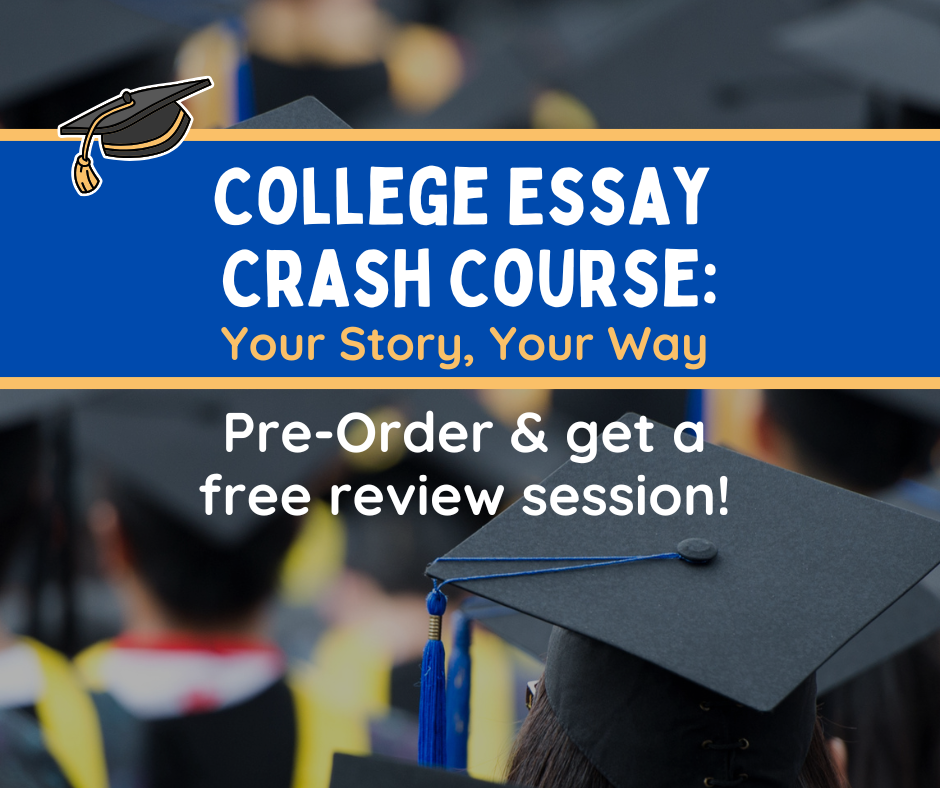
That’s exactly why I created College Essay Crash Course: Your Story, Your Way.
This self-paced crash course walks teens through:
- Discovering their unique angle (even if they think their life is “boring”)
- Building authentic voice (so the essay sounds like them, not ChatGPT)
- Navigating the writing process without Sunday night panic spirals
- Creating something they’re actually proud of
It’s designed for how teenage brains actually work: bite-sized lessons, mobile-friendly, interactive activities, and a tone that feels like a supportive coach—not another adult lecturing them.
For Younger Teens: Start Building the Foundation Now
If your teen is 13, 14, or 15 and you want to give them an early introduction to personal narrative writing, this crash course works for them too.
Here’s why:
It’s low-pressure. They’re not writing an actual college essay yet—they’re just learning the skills. There’s no “this has to be perfect” energy hanging over their heads.
It’s self-paced. Your homeschool schedule is already full. This fits into whatever rhythm works for your family. And since it’s mobile-friendly, they can work on it in the car, waiting for siblings after practice…You name it!
It builds confidence early. By the time they’re juniors or seniors, they’ll already know how to tell their story. The college essay won’t feel like this massive, scary thing—it’ll just feel like something they know how to do.
It’s a life skill. Even if your teen doesn’t end up going to a traditional four-year college, the ability to reflect on experiences and communicate authentically will serve them in every path they choose.
Pre-Order Special (Ends December 1st)
Right now, you can pre-order College Essay Crash Course: Your Story, Your Way and get:
✅ A complimentary parent guide so you know how to support without hovering (especially helpful for homeschool parents who are used to being involved in their teen’s education)
✅ A FREE 1:1 essay review session with me (normally $60/hour) so your teen gets personalized feedback when they need it most
✅ Pre-order pricing of just $47 (jumps to $87 starting December 1st at 8am)
That’s over $100 in bonuses PLUS $40 in savings—but only if you pre-order before launch.
Whether your teen is 13 and just getting started, or 17 and staring down application deadlines, this crash course meets them where they are.
👉 Pre-order now right here
Have questions about whether this is right for your teen? Email me at hello@wholemindset.com or grab all the details right here.
The Bottom Line
The college essay doesn’t have to be the thing that breaks your teen senior year.
And personal narrative writing doesn’t have to be something they figure out under pressure.
If you give your teen the tools early—whether they’re 13 or 17—you’re not just preparing them for college admissions. You’re giving them the ability to understand themselves, tell their story, and move through life with confidence.
That’s worth starting now.
About the Author
Dru is a teen development specialist who combines academic support with social-emotional coaching to help students succeed both in school and life. She runs Whole Mindset Coaching and Education, teaches on Outschool, creates resources for Teachers Pay Teachers, and offers 1:1 college essay coaching. Her work centers around The WHOLE Method™ framework, helping teens build confidence, develop healthy habits, and achieve their goals. As a parent herself, she’s passionate about ensuring all teens have access to life-changing SEL skills—including the ability to tell their own stories authentically.
Related Posts You Might Like:
- “5 Signs Your Teen Is Ready to Start Thinking About College”
- Homeschoolers Bring Unique Strengths to Their College Applications
- Hidden Truth About Academic Struggles (And What Actually Helps)